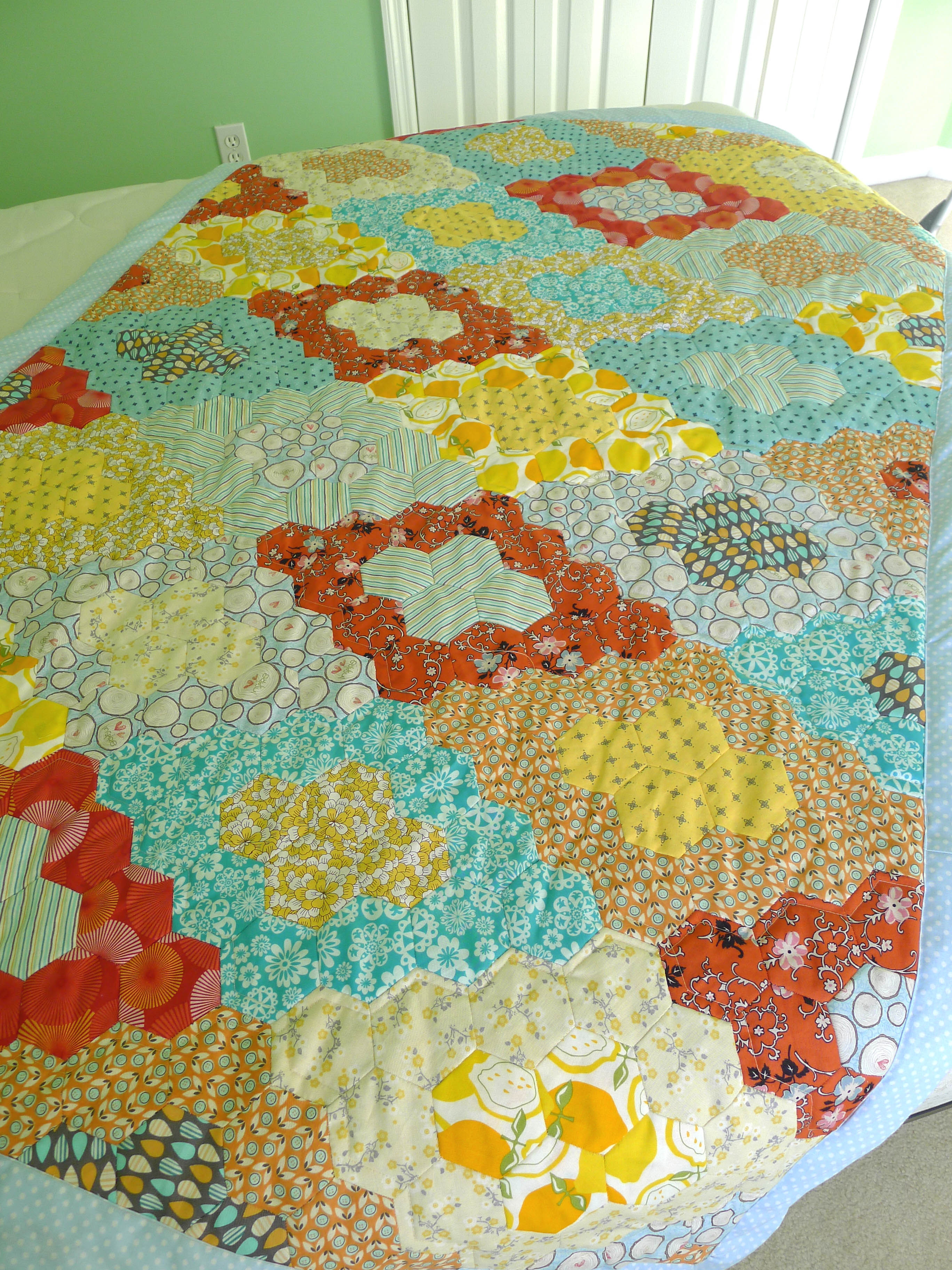
Honeycomb Blanket – part 2, final

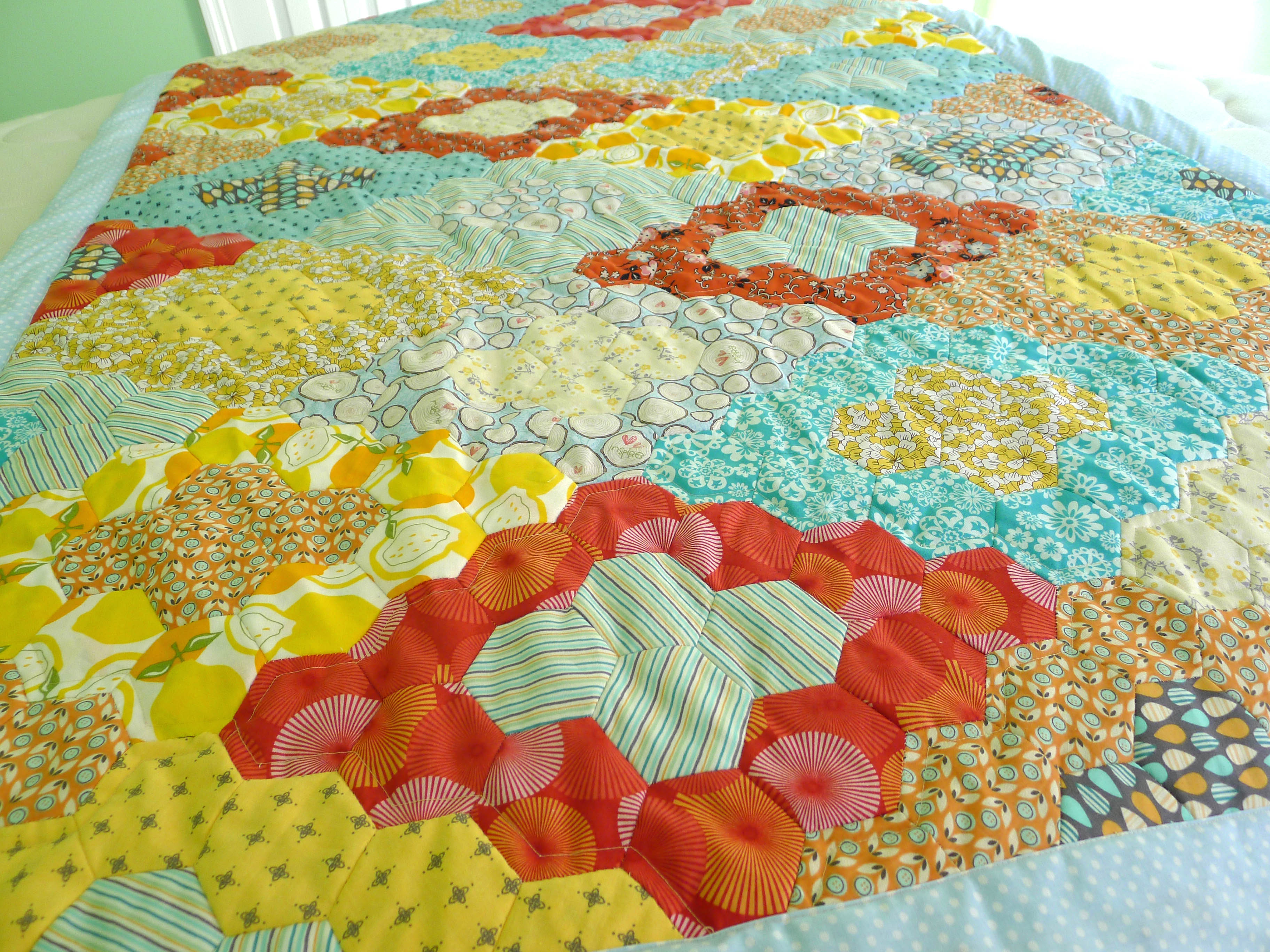
Finally I finished the blanket!!! After hours of hours stitching, it’s done 🙂

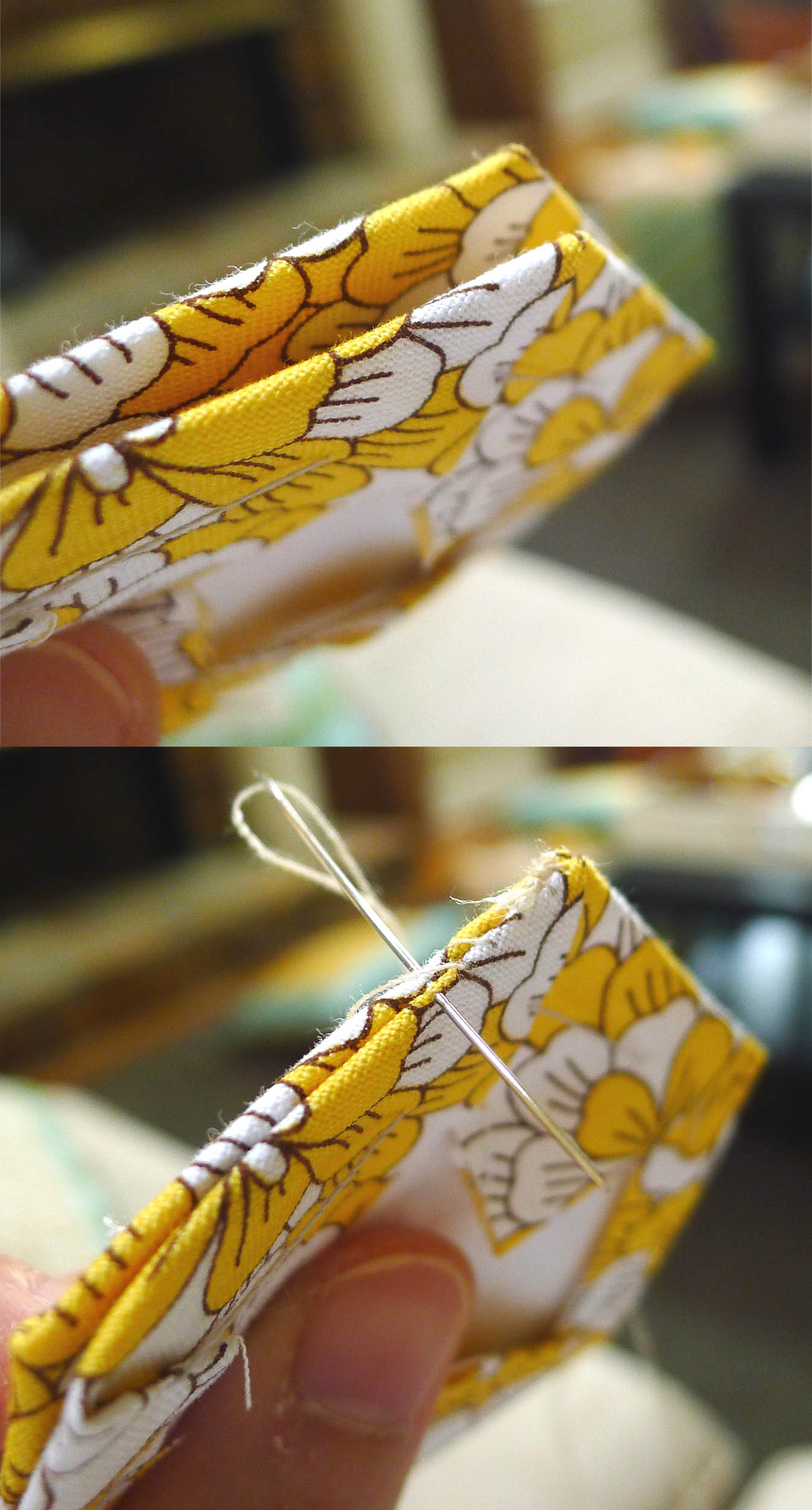
1. Stitch the fabric to follow paper template shape. I didn’t pierce through the paper, other tutorial suggested it, I think leaving the paper clean will save time when we want to remove it.


2. Stitch link the pieces.


3. Each big piece link.

4. Put the big pieces together as desired.

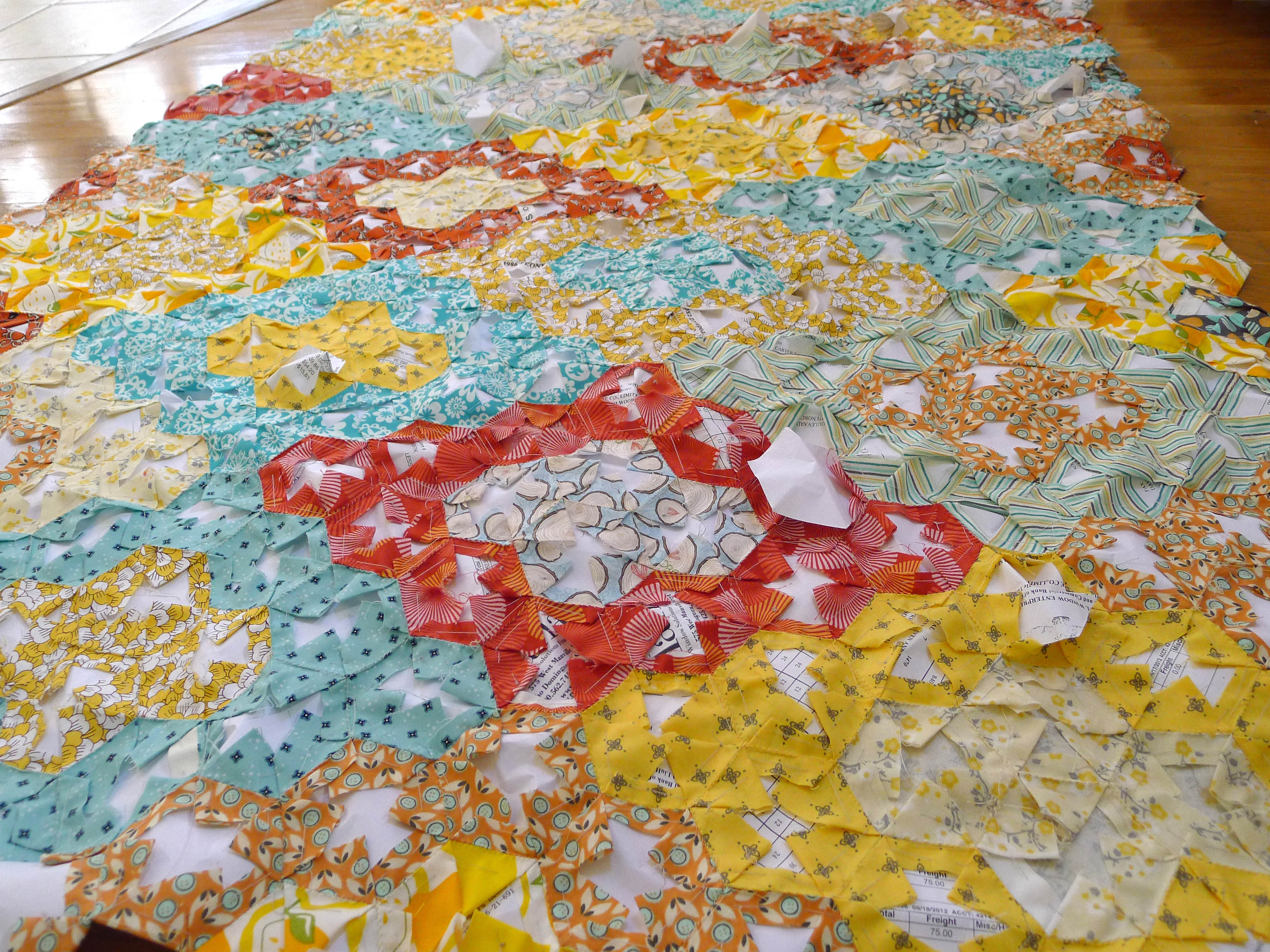
5. Stitch link all big pieces. This is the picture from the back, you can see the paper templates.

6. Remove the paper templates.

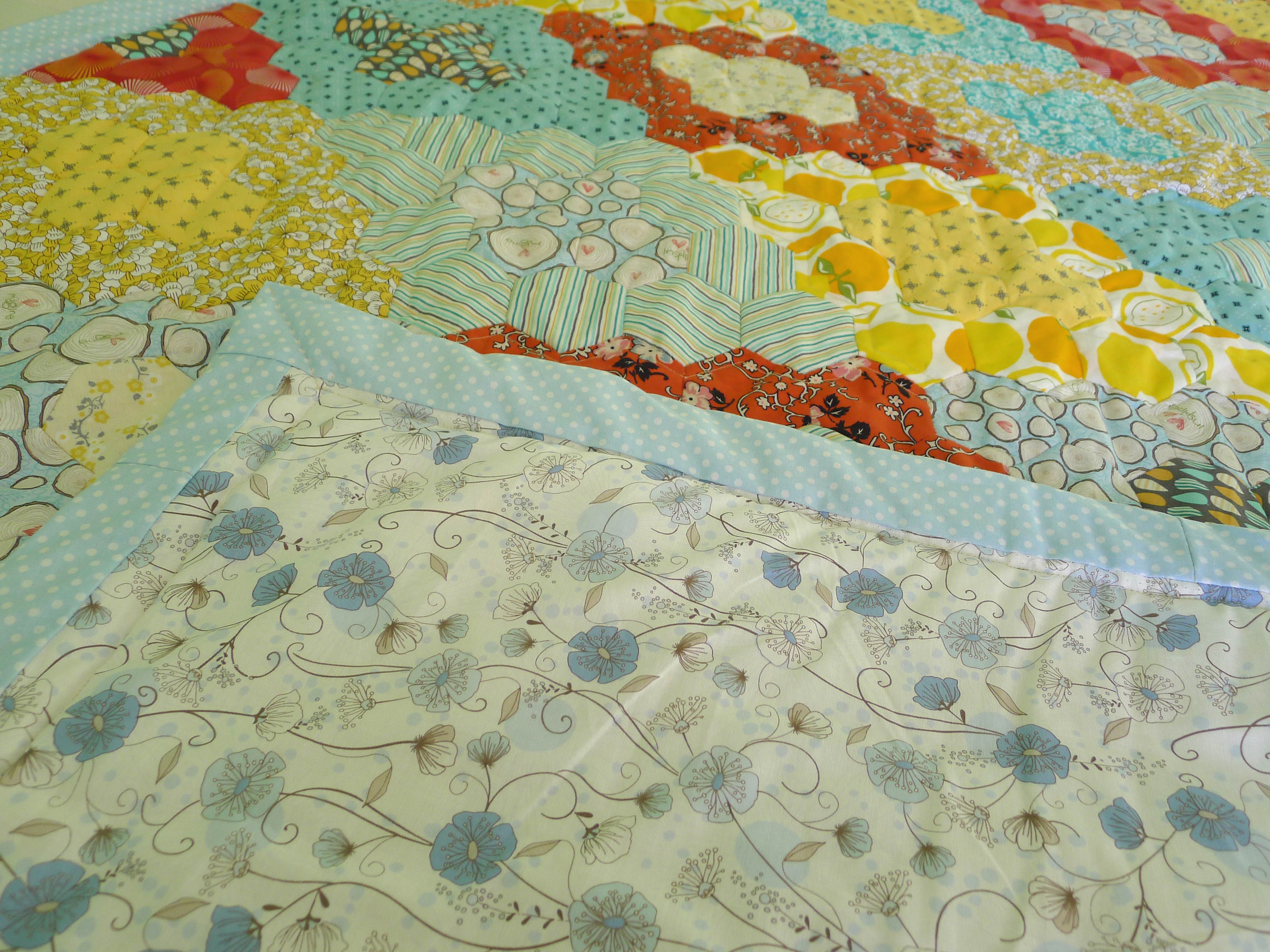
7. I forgot to document the process of putting the cotton batting, the border and back liner, sorry 😦 …

8. Finished.

Honeycomb Blanket – part 1

Though popular term for this is hexagon quilt, I prefer name it honeycomb..  to me it sounds much better, less technical. This is my first honeycomb blanket and I don’t think I will make another at a long long period of time, too much work 🙂 Don’t get me wrong, I enjoy making it, but I have so many projects going on this one just takes much more time than I anticipated. At this point I am half way to finish the blanket so stay tune for next post Honeycomb Blanket part 2.

My Ama (my grandmother from mother side) used to make patch blankets from scrap fabrics. Back then, the blanket was made using any kind of left over fabric in any size, it was so irregular, no pattern, totally mismatch. There were sometimes fabrics from old pants, dress, shirt, and mostly polyester. We calls Ama blanket Poor guy blanket because it was so unattractive although it serves its function very well, imagine how warm polyester fabric can be :).  Ama always tried to salvage as much fabric as possible, her philosophy was saving! saving! saving! and less spend, similar to recycle, reuse, and reduce … hmmm when I think back of her, she was actually more advance in thinking process then our generation, she’d got this idea! Making my own blanket reminds me a lot of her, all the compassion and values she taught us, my prayer for her always.

I made 2 patch blankets before, both were for presents, so I don’t actually have my own blanket with me… they were not the version of poor guy blanket though, they were in color coordinated soft cotton fabric .. hey, they were presents! had to make sure it’s a nice looking blanket. I learn the term quilting here in US, there are special quilting fabric, quilting book, quilting pattern, quilting class .. wow it amazes me how a simple blanket making that I call patch blanket becomes so fancy. Then I saw this blog about making hexagon quilt, inspired me to make mine, my honeycomb blanket.
Fabric selection.
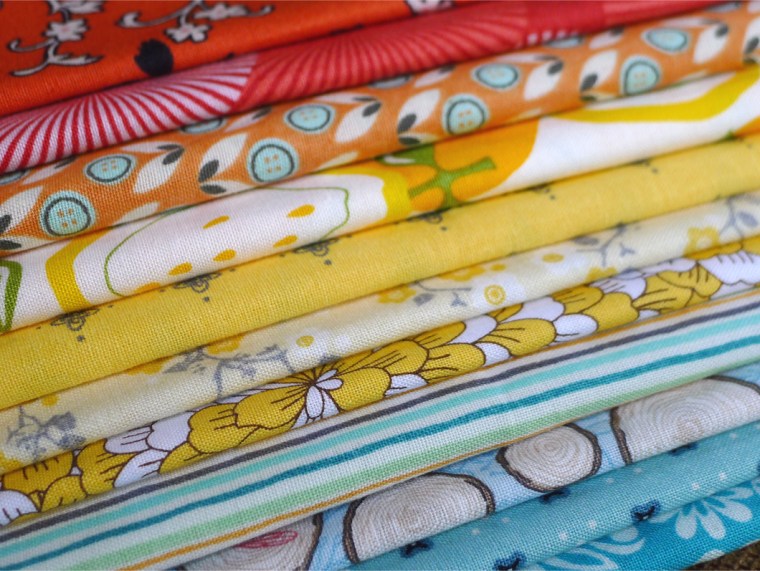
Cut fabric. I found this blog how to make hexagon quilt without hand stitch each hexagon piece, it’s faster. After comparing several tutorial I decided to go with the traditional method, the one that requires long process but for me it gives puffy look which I like.
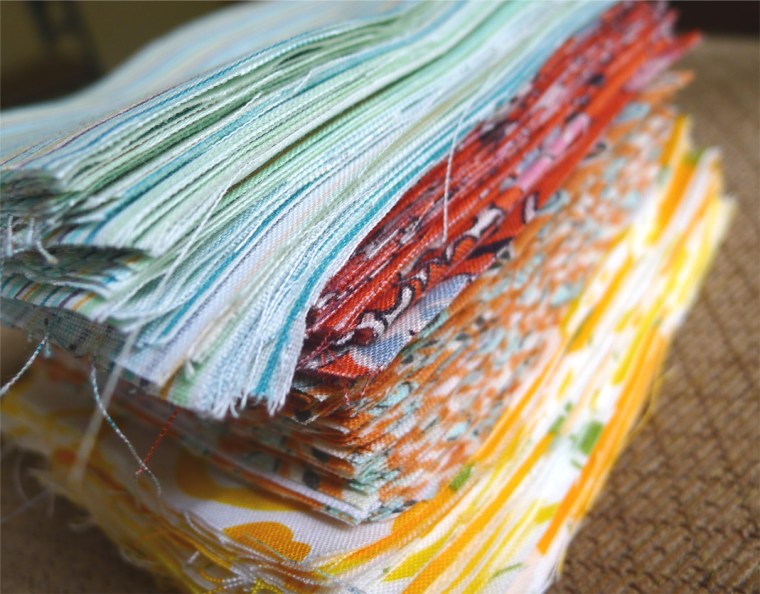
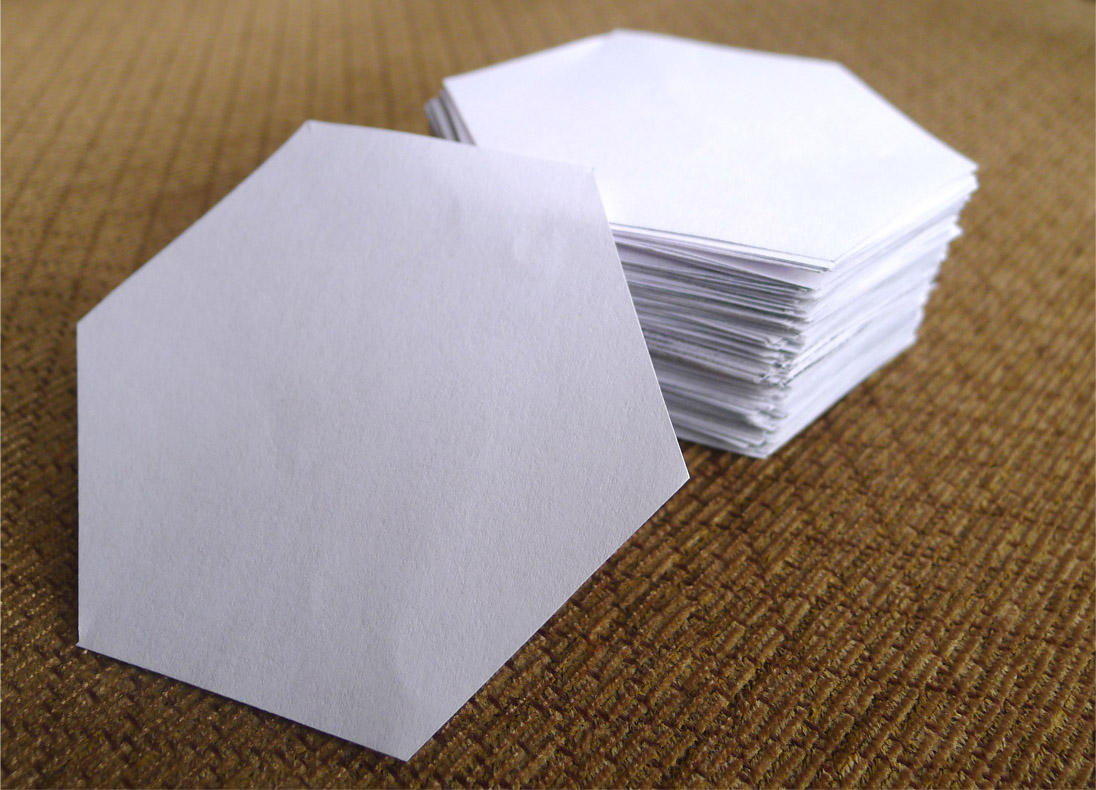
Paper template, almost 500 of them.

My sister also made quilt. Picture of my niece on the blanket she made, cute!

Ok, those are the pictures of progress last weekend, I hope to finish my honeycomb blanket this weekend. To be continued, Honeycomb Blanket – part 2.

Personalized Ipad Case

I had been planning to make a new and personalized home for my Ipad since last year. When I found this cute fabric I thought well this is the time, even better I was able to use, again, the left over Batik fabric for its lining.

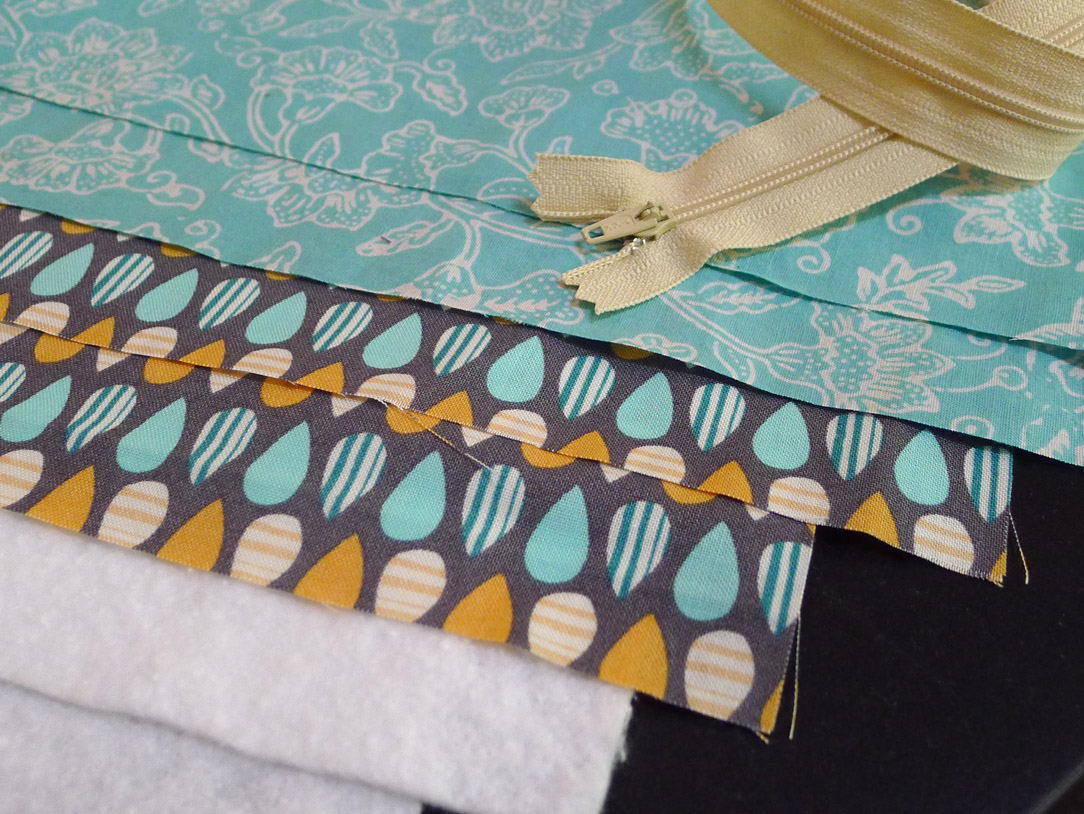
1. Material :

  • Cut 11″ x 9″ main fabric, cotton batting, and lining, 2 pcs each. ( or larger if you prefer bigger case for more room, I am using 3/8″ seam allowance ).
  • 18″ long zipper.


2. Place main fabric and cotton batting together, draw any pattern you like ( here are random big and small circles ), then hand stitch using contrast thread. Since I don’t have erasable pencil, I drew on the batting side to keep the main fabric clean. This is optional but I like to put this extra step to add nice detail and to stabilize the cotton batting onto the main fabric.

note : since the main fabric and cotton batting are now attached, I will name them together as main fabric in the next step, for typing efficiency.


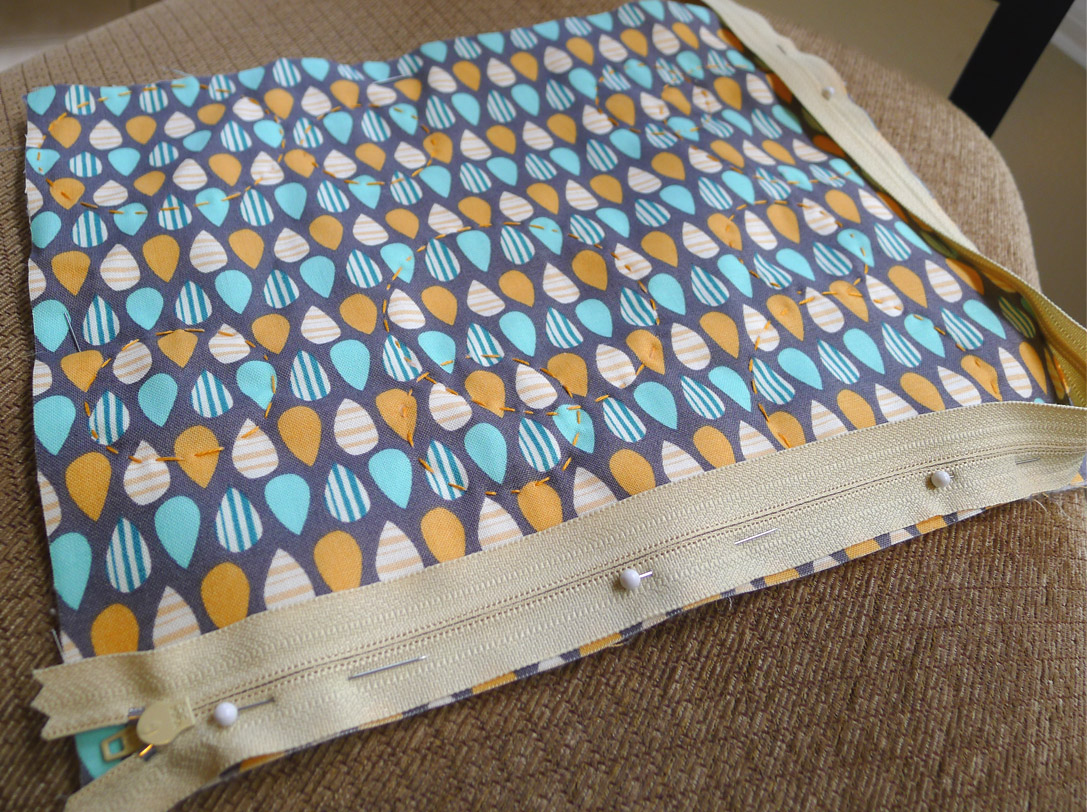
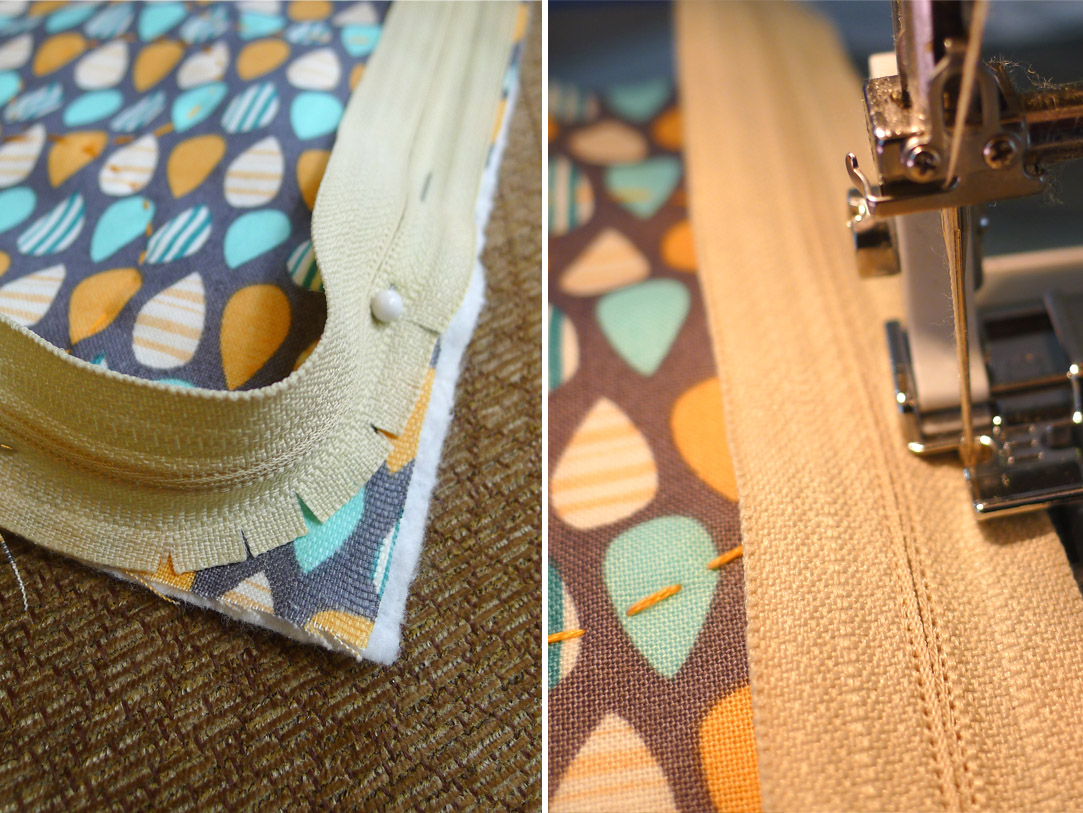
3. Pin the zipper on the main fabric, right size facing together as pictured.

4. Sew 1/4″ from the edge. You can also sew the lining at the same time but here I separate the steps. Make sure to cut the zipper edge at the curve area as pictured.

5. This is what it looks like.

6. Place the lining on the top of zipper so that the right size of main fabric and lining facing each other with zipper sandwiched in between.


7. Sew 3/8″ from the edge, closer to zipper opening. This later stitch line will hide the 1st stitch line on the main fabric, the reason why I sew 1/4″ on the step#4… hopefully this is not confusing you 🙂

8. Sew extra stitch on main fabric along the zipper line just to make it looks neat. Continue with the 2nd pair of fabric on the opposite side of zipper.

9. Open the zipper, pin the main fabrics with right sides facing each other, make sure the linings are not included, Sew 1/4″ from the edge. Cut extra length of zipper. Next, pin the linings together right sides facing each other, don’t forget to leave at least 2-3″ opening for flipping the fabrics inside out.

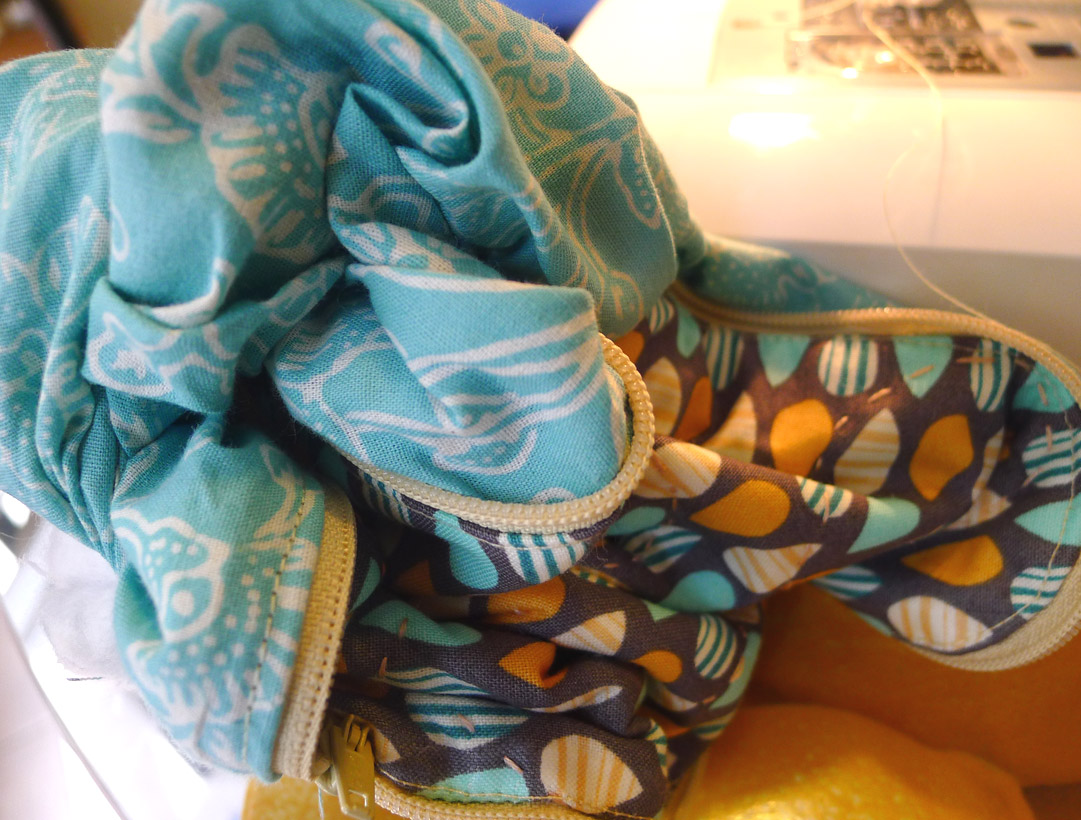
10. Flip inside out. Honestly this is a scary moment since everything looks so messy and out of order, but don’t worry after this step you can have big smile :). Don’t forget to stitch close the lining opening.

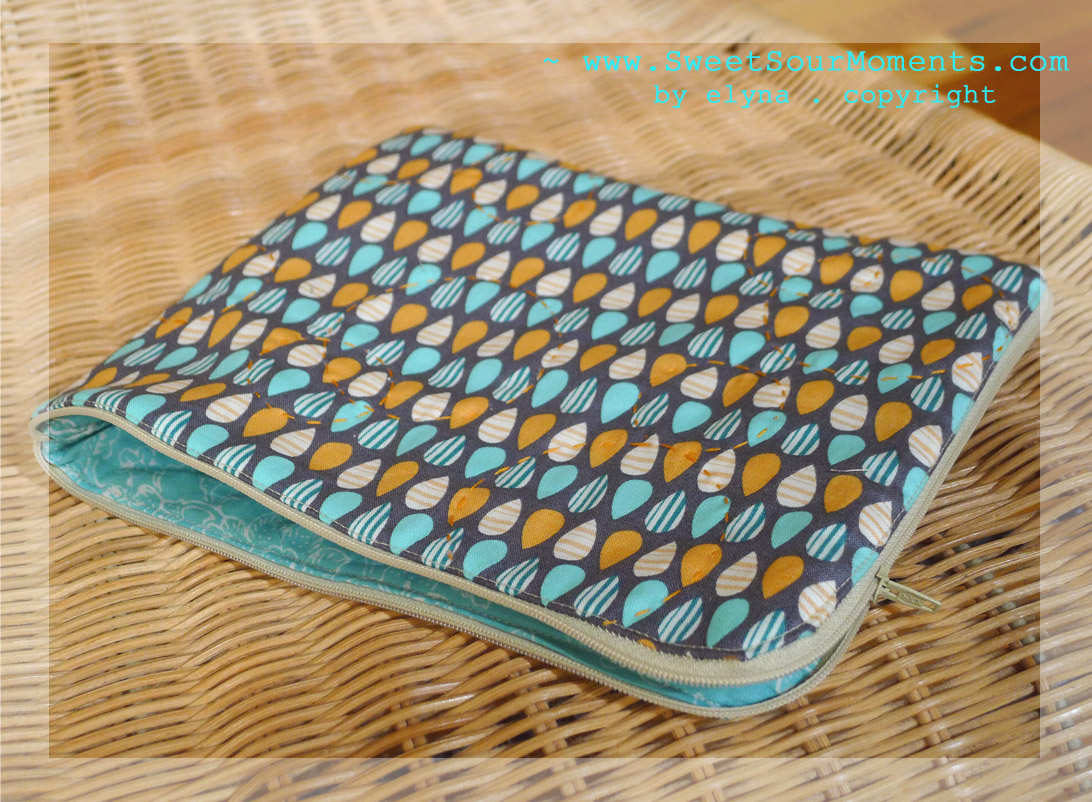
11. Done! hopefully you enjoy the tutorial and good luck!

Earphone Pouch DIY

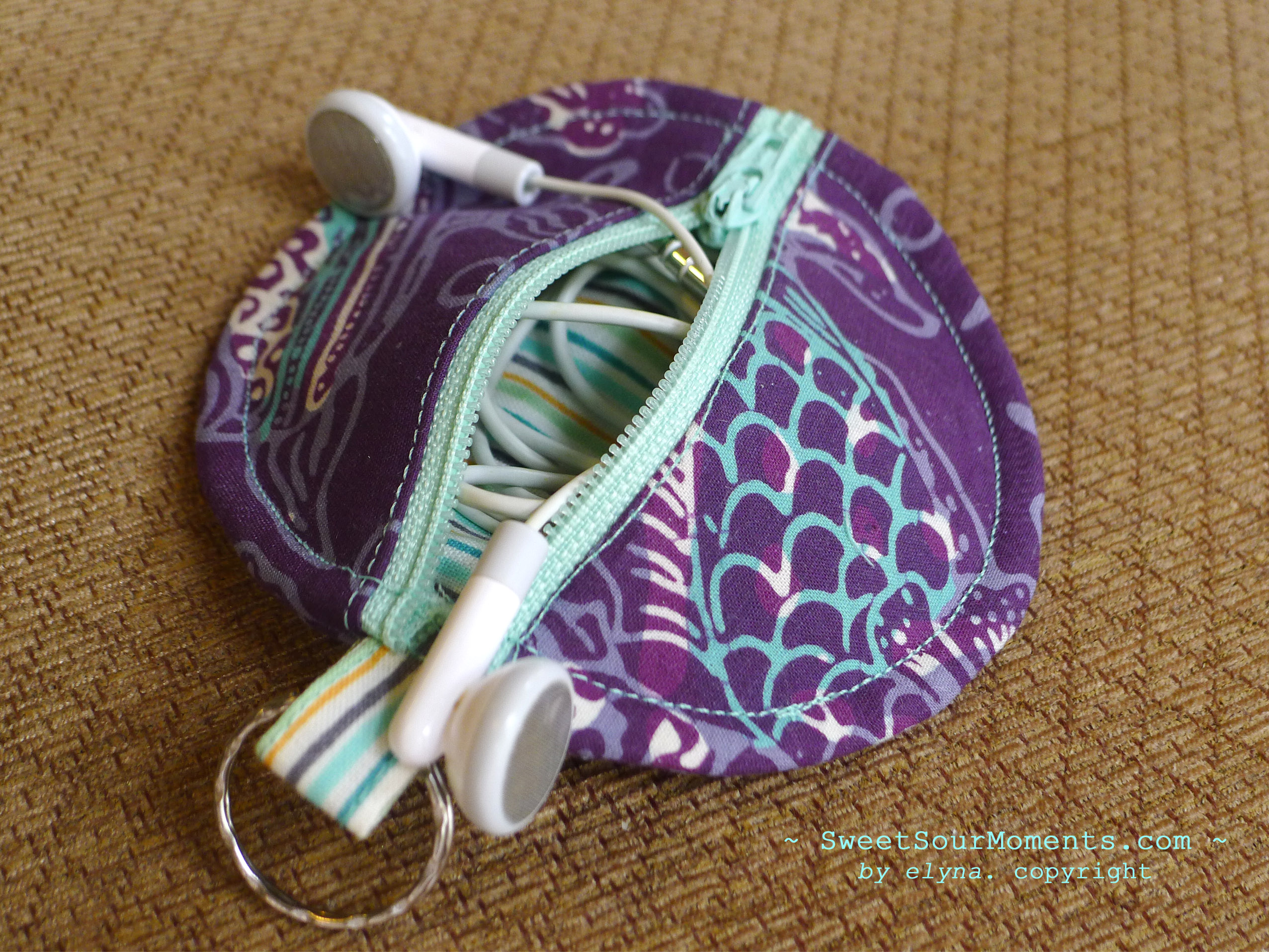
I saw this super cute pouch picture in one of DIY blog which name I forgot to save so hopefully the step by step instruction here is as close as the original posting and would be able to help crafty reader to make it.

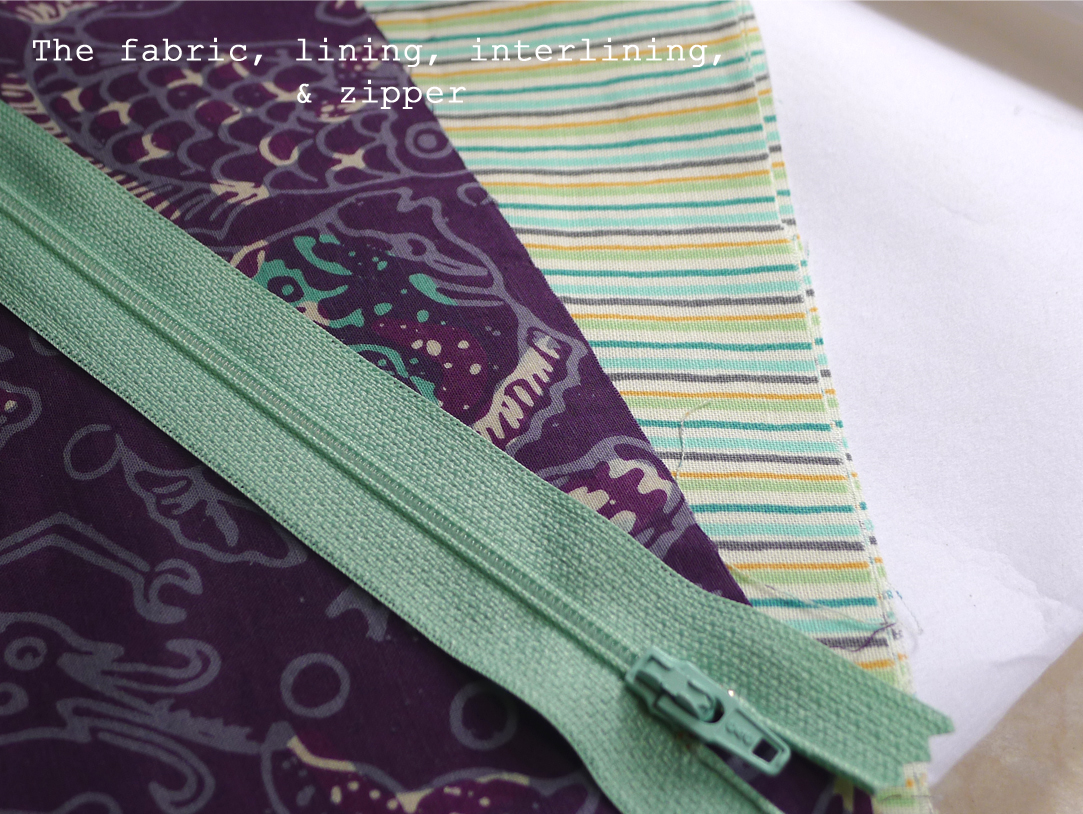
I used the leftover purple Cirebon Batik as main fabric with stripped color coordinated fabric as the lining and tab. I can say that this is another Fun with Batik project and you will find me using many Batik fabrics in future DIY or sewing post, it really is so much fun also bring my feeling closer to my family and friends in Indonesia 🙂

1. Cut :

  • 1 pc of 4.5″ diameter main fabric, lining, and interlining
  • 2 pairs of half circle main fabric, lining, and interlining
  • 1 pc of 2.5″ x 2.5″ fabric for the tab

2. Prepare the tab

3.  Line and pin the 1st half circle main fabric, lining, and interlining with zipper positioned in between main fabric and lining. Right side of main fabric and lining facing each other.

4. Sew 0.25″ from zipper edge

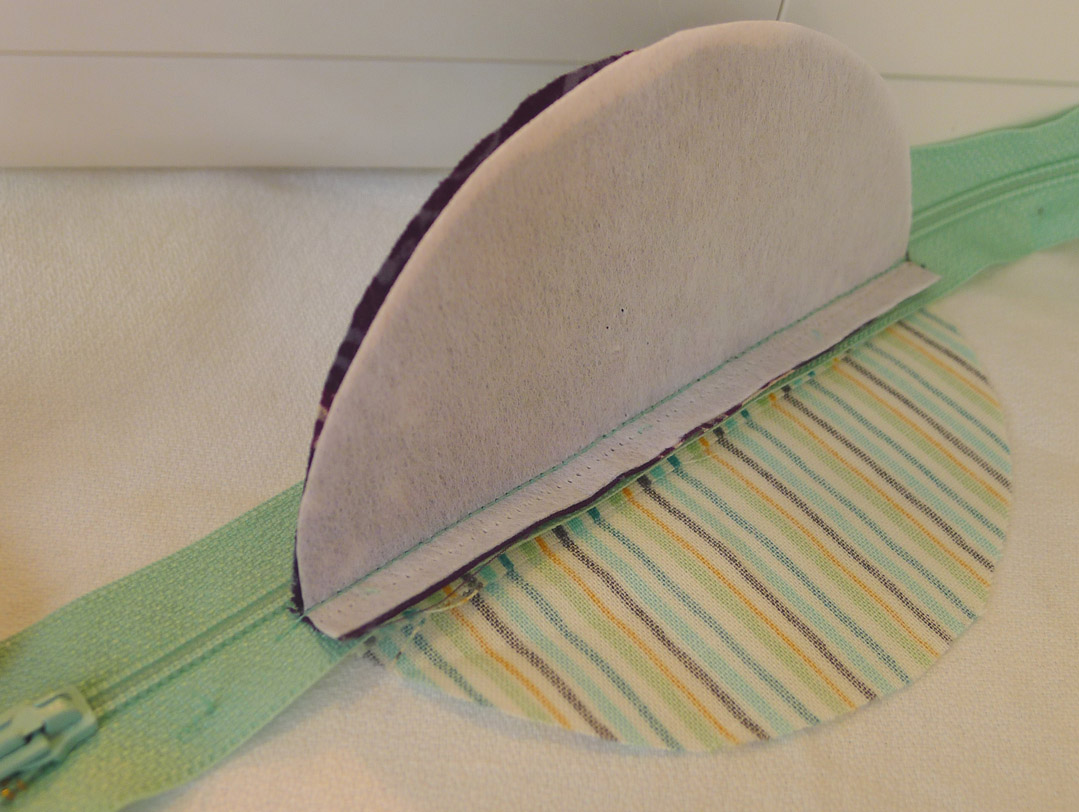
5. Flip open the fabric to the opposite side so that interlining meets the wrong side of lining fabric.

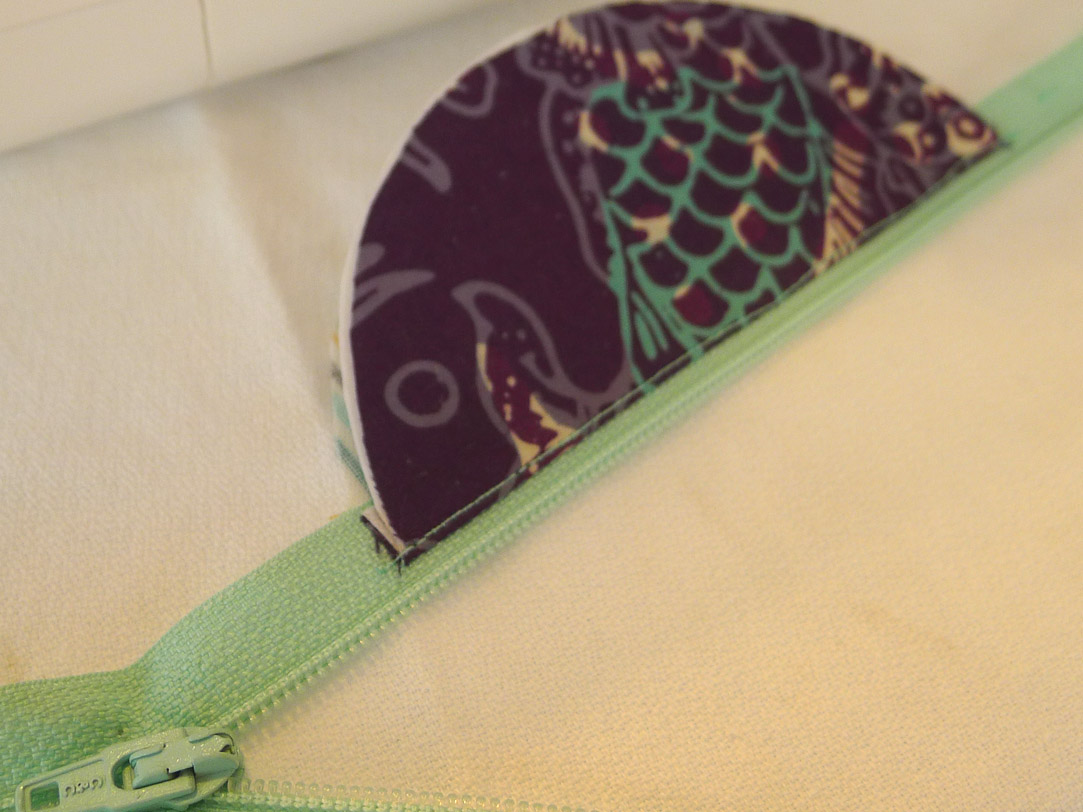
6.  Sew the front side along the zipper line.

7. Repeat for the 2nd half circle on the other size.

8. This is what it looks like from the back.

9.  Move the zipper head to the middle ( half way open ) then sew the tab. The position of zipper is important to make sure you will be able to flip the fabric later.

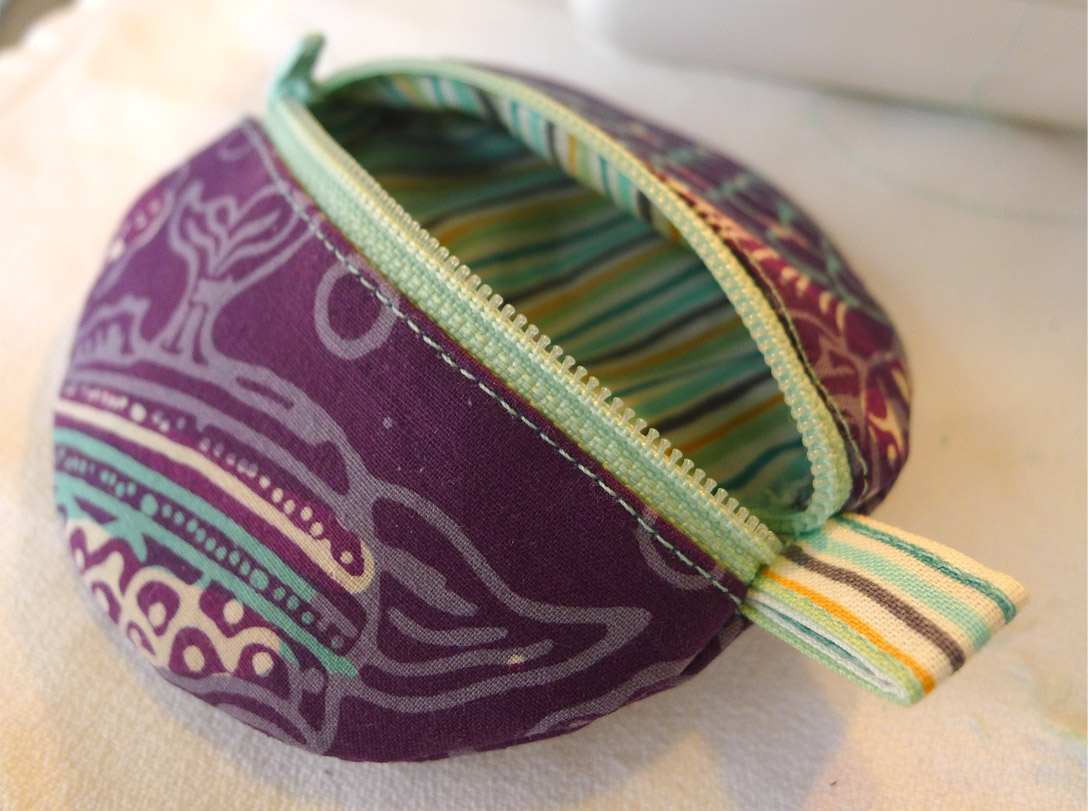
10. Arrange the full circle fabric (with interlining in between, right side fabric facing outside) then put together with the sewed half circles. Secure with pins, make sure the main fabrics facing each other.

11. Sew about 0.25″ from the edge, trim the excess interlining just before the stiches, cut the excess zipper, then flip inside out.

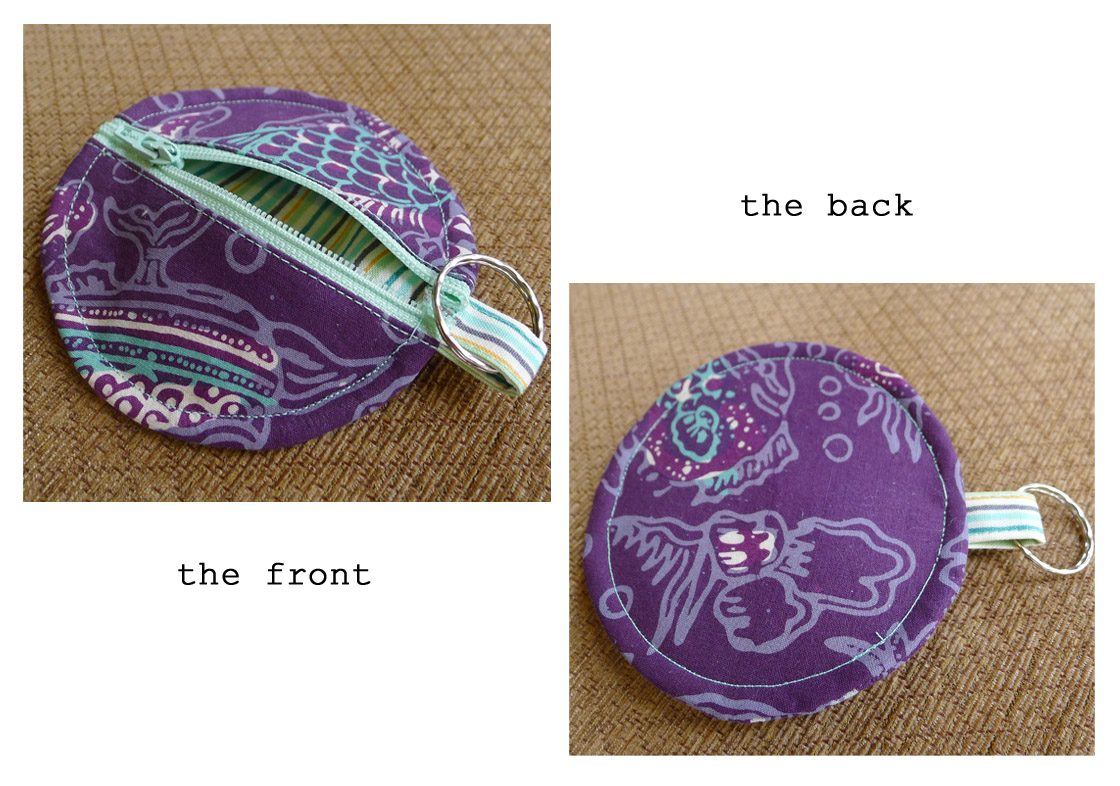
12. Sew along the edge of circle, put the key chain/ ring and done!!!.

Fun with Batik

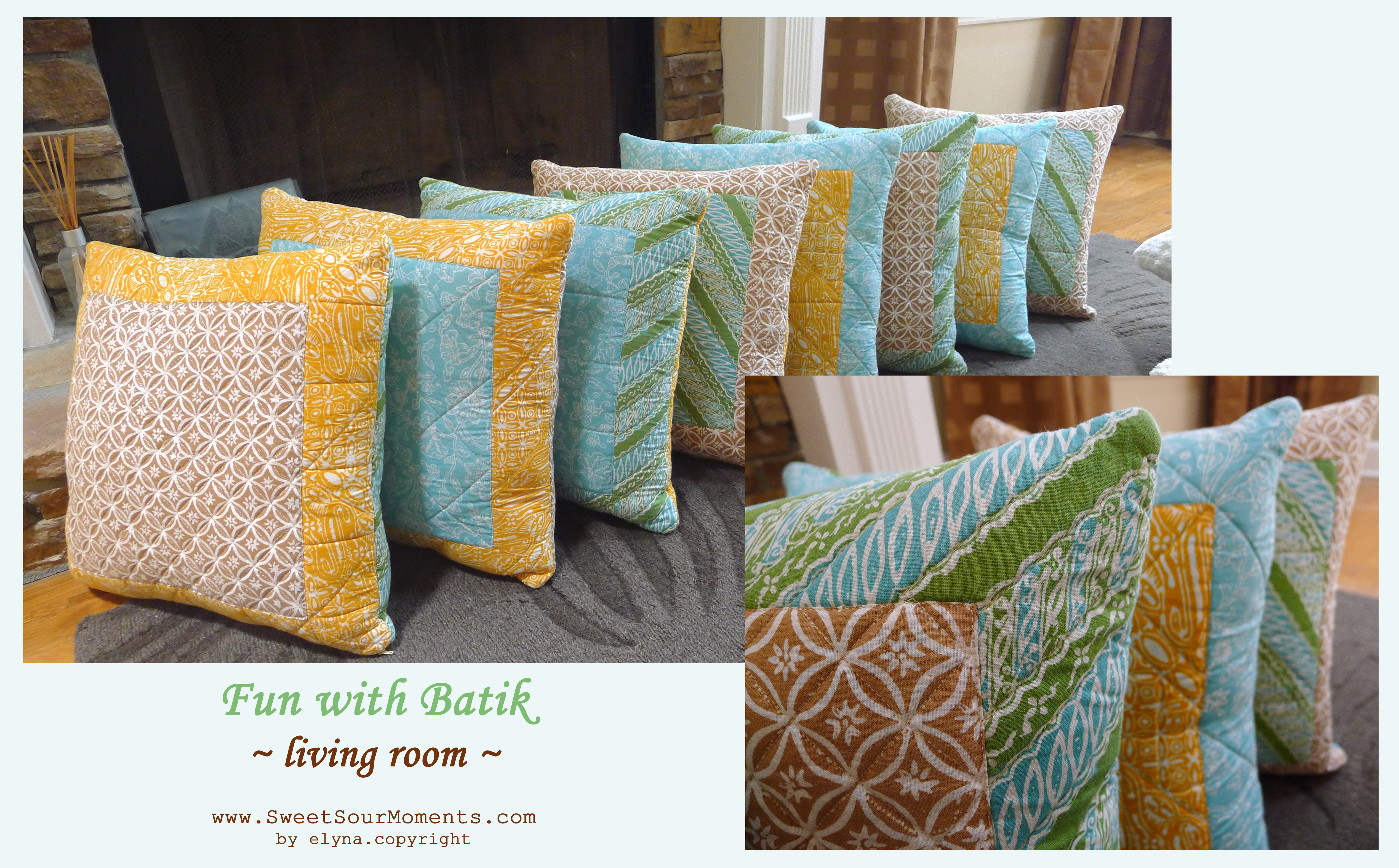
I bought my first Batik fabric during my trip back to Indonesia last year. It was because I didn’t want to spend nearly $28 for a batik pillow cover sold at Pendopo, a high end store for Indonesian art & craft. My mom, my sister, and I began the planning to make our own pillow covers. We went to Pusat Batik pasar tanah abang where you can find all kind of batik fabric in reasonable price.

I used to have thought that batik is dark, brown, old, and not fun but when I saw how much batik design and quality have progressed I was quite surprise, specially Cirebon stamped batik with its colorful design. This is my pick for batik pillow cover project. The next project is for kitchen: fridge cover, apron, and oven pad. I bought the fabric, dark blue, during my trip this year then combined with left over yellow from first project.

Though the pillow cover at Pendopo is very nice and also professionally made, I think mine is more fun 🙂

More information about batik at wikipedia: http://en.wikipedia.org/wiki/Batik